
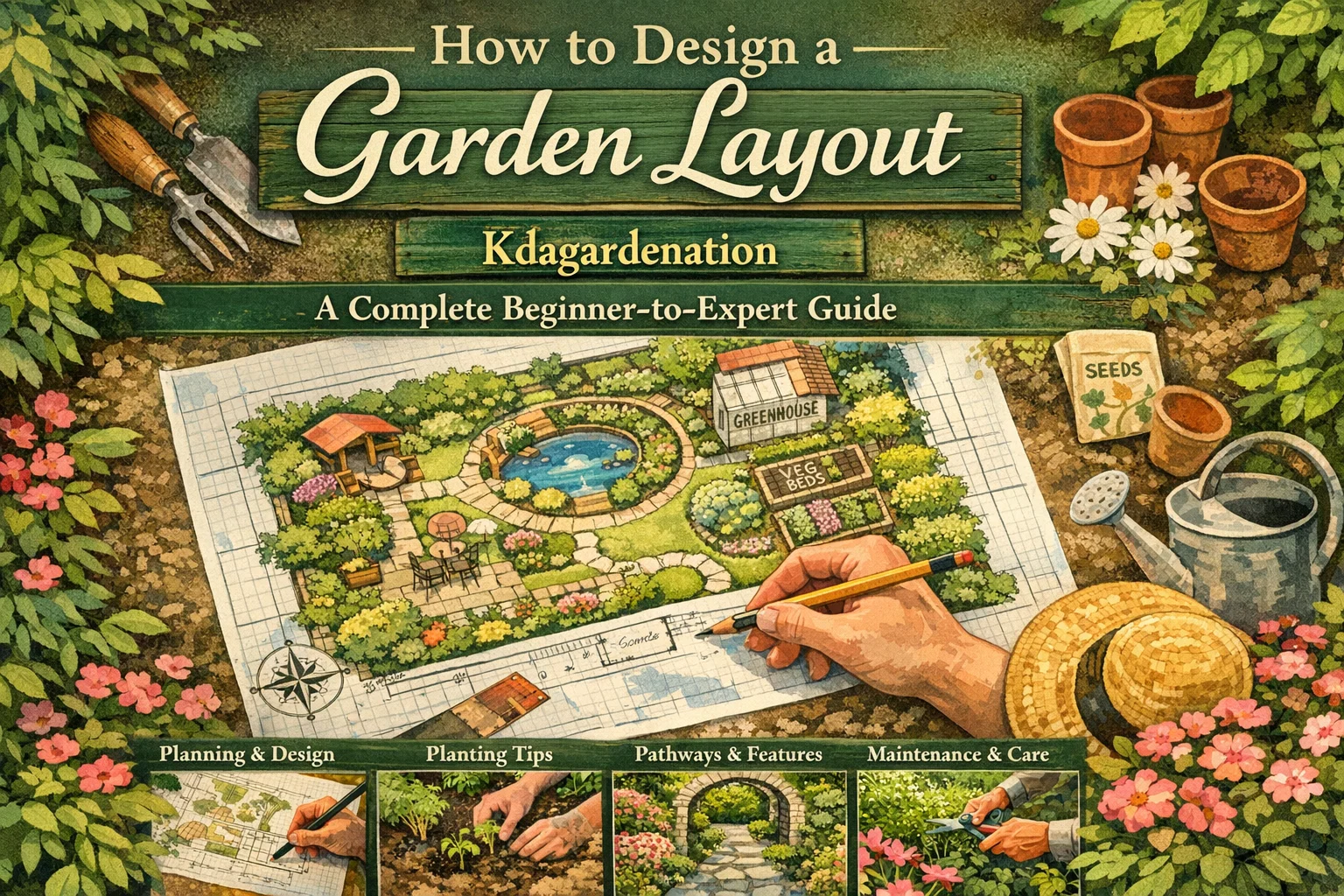

- When you are searching on how to design a garden layout kdagardenation, then you are probably searching on an easy to follow practical way of designing a beautiful and useful garden space. A garden is not merely a place where one plants flowers or trees anywhere they wish, and this involves planning, managing space, and creativity, so that the end product is not only appealing but also simple to maintain. Here we are going to show you step by step how you can come up with an efficient garden layout keeping in mind the rules on how to design a garden layout kdagardenation.
Knowing the fundamentals of Garden layout design.
It is always good to know what a garden layout is before embarking on any gardening project. A garden layout is the formal arrangement of plants, walkways, water features, seating and decorative features in a garden area. Planning is the first step that needs to be taken to learn how to design a garden layout kdagardenation.
- Knowing the fundamentals of Garden layout design.
- Step 1: State Your Intention.
- Step 2: Draw a Sketch Plan.
- Step 3: Select the appropriate Plants.
- Step 4: Plan Access Pathways and Areas.
- Step 5: Add Focal Points and features.
- Step 6: Take into account Balance and Symmetry.
- Step 7: Plan for Maintenance
- Step 8: Add Personal Touches
- Final Thoughts
Begin by noting what you have available. Calculate the area and record key environmental conditions including sunlight exposure, soil type, drainage and wind direction. These factors are important to know what plants will perform optimally in your garden.
Step 1: State Your Intention.
Each garden has a mission. Others desire a green area which is relaxing and others desire a vegetable garden or a combination of both. In implementing how to design a garden layout kdagardenation, the purpose of your garden should be well established.
Ask yourself:
- Would you prefer a decorative garden or functional food garden?
- Would you have seating/entertaining areas?
- Do you require kid or pet space?
The whole design will be based on your responses.
Step 2: Draw a Sketch Plan.
When you know what you want to do, begin to draw a sort of rough sketch on a piece of paper. It is among the significant steps in how to design a garden layout kdagardenation as it will allow you to see the end result before the actual changes are made.
Split your garden into areas like:
- Planting areas
- Walking paths
- Seating corners
- Water features (optional)
Ensure there is space between sections to ensure that the garden is not crowded.
Step 3: Select the appropriate Plants.
One of the most important elements of the garden design is its choice of plants. Not all plants are the same; therefore, make a good choice depending on your climate and the type of soil. When it comes to how to design a garden layout kdagardenation, have fun with the types of plants and mix:
- Plants to give color.
- Shrubs for structure
- Trees for shade
- Herbs or vegetables for functionality
And remember the changes of seasons that way your garden will be beautiful all year round.
Step 4: Plan Access Pathways and Areas.
Pathways are not given much attention, yet they are necessary in beauty and functionality. Any properly designed garden plan will have proper walking paths.
In making a practice on how to design a garden layout kdagardenation, materials such as gravel, stones or bricks are to be used to make paths. Not only do these enhance accessibility, but also contribute to aesthetics in your garden design.
Make sure that paths are broad to move and maintain easily.
Step 5: Add Focal Points and features.
In a good garden, there are always points that are the focus of much attention. These may be fountains, sculptures, bench, or flower beds in a special form.
When using how to design a garden layout kdagardenation, consider focal points as the areas that are going to be the focal points in your garden. They assist in relieving boredom and develop visual appeal.
For example:
- A flower-bed with a fountain at the centre.
- A shaded seating area under a tree
- A wall garden that is vertical.
Step 6: Take into account Balance and Symmetry.
Any garden design should have balance. A balanced garden is natural and aesthetically pleasing. When coming up with a design of a garden layout kdagardenation, attempt to spread out plants and other features evenly in the area.
You may select either:
- Symmetrical design (organized and structured)
- Asymmetrical design (natural and relaxed)
These two styles work well, whichever style you choose.
Step 7: Plan for Maintenance
An attractive garden needs a lot of attention. In designing a garden layout kdagardenation, maintenance requirements should always be put in mind. Plants should not be crowded, and low-maintenance varieties should be used in case of a beginner.
Certain maintenance recommendations are:
- Regular watering schedule
- Seasonal pruning
- Soil fertilization
- Weed control
It will conserve time and effort in the long run through proper planning.
Step 8: Add Personal Touches
Your personality should be expressed in your garden. Include decorations like lights, pots, windchimes or traditional sitting spots.
Personalization is an enormous factor in designing a garden layout kdagardenation in advanced planning to make the garden look unique and comfortable.
Final Thoughts
The art of creating a garden is an exciting and fulfilling task. Any outdoor area can be turned into a beautiful and useful place by following a set of steps and implementing the rules of how to design a garden layout kdagardenation. Planning and sketching, choice of plants and maintenance are each a part of effective garden design.
Regardless of whether it is your first or the sixth time in gardening, one thing that one should always remember is patience and regularity. An organized garden will beautify your house and also give you a relaxing place to spend time with nature.