

The Problem Nobody Talks About
I moved into my first studio apartment three years ago. I was proud of every single decorating decision — the vintage-inspired gallery wall, the cozy reading nook with the rattan chair, the little herb garden on the windowsill. It took months to make that 480-square-foot box feel like home.
- The Problem Nobody Talks About
- Why Hiding Your Cameras Actually Makes Them More Effective
- The “Blend, Don’t Hide” Mindset
- Best Ways to Hide Indoor Security Cameras in Home Decor
- Disguise Cameras as Everyday Objects
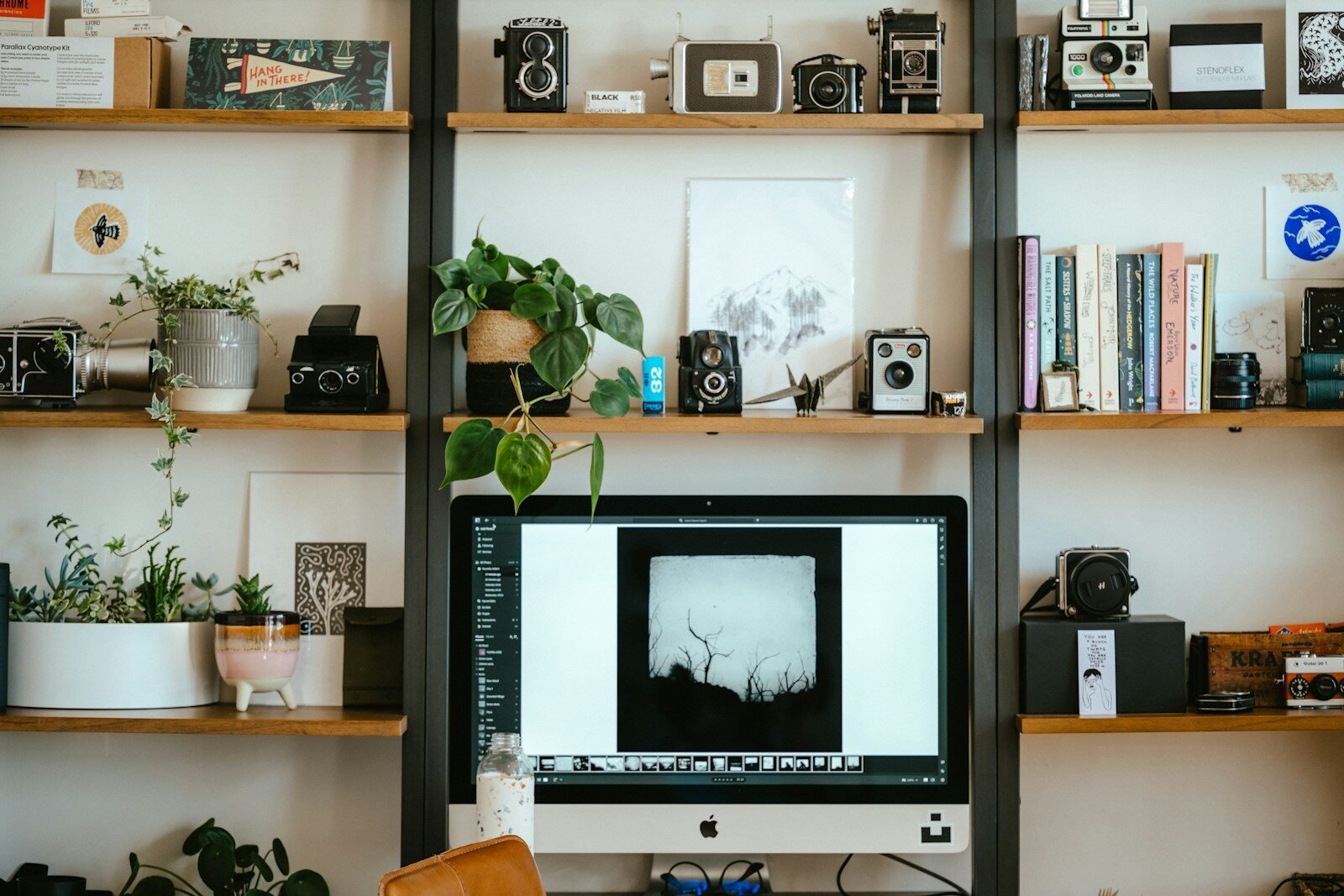
- Use Shelves and Bookcase Styling
- Hide Cameras Inside Plants (Yes, Really)
- The Clock and Wall Art Method
- Corner Ceiling Placement with Crown Molding
- Smart Speaker Integration
- Room-by-Room Breakdown
- What NOT to Do When Hiding Cameras
- Comparison Table: Best Discreet Camera Placements
- Budget vs. Premium Camera Options for Discreet Setups
- FAQ
- Final Thoughts
Then I installed a security camera.
It was boxy, black, and sat on my bookshelf like a surveillance robot from a 1984 dystopia. Every time I had friends over, someone would notice it and make a joke about “Big Brother.” It stuck out against my warm, curated space like a sore thumb. I tried angling it differently, tucking it behind some books — nothing helped.
Here’s the thing: I needed that camera. I lived alone, my building had no doorman, and the parking lot downstairs had seen some sketchy activity. Security wasn’t optional. But neither was living in a space that felt mine, not like a corner store at midnight.
If you’ve ever felt that same tension — wanting home security without your living room looking like a monitoring station — you’re in exactly the right place.
This guide is everything I wish someone had told me. No fluff, no vague “try to blend it in” advice. Just real, tested strategies for hiding indoor security cameras so well that guests will walk right past them without a second glance.
Why Hiding Your Cameras Actually Makes Them More Effective
Here’s something that surprises most people: a visible security camera can actually work against you in some situations.
Experienced burglars — the methodical ones, not the panicked opportunists — will sometimes identify camera angles and deliberately move around their blind spots. A camera that’s obviously mounted on a corner bracket tells a smart intruder exactly where not to stand.
A camera tucked inside a bookshelf arrangement or nested in a decorative plant? That’s a different story. According to home security experts at CNET and SafeWise, hidden indoor cameras capture more natural behavioral footage and are far less likely to be tampered with or disabled during a break-in.
There’s also the psychological angle. Visible cameras can make you feel like you’re under surveillance in your own home. Over time, that wears on you. Seamlessly integrated cameras disappear into your daily environment — you get the security benefit without the constant reminder that you felt unsafe enough to need them.
So hiding your cameras isn’t just an aesthetic preference. It’s actually smarter security strategy.
The “Blend, Don’t Hide” Mindset
Before we get into tactics, let’s reframe the whole approach.
Most people think about this wrong. They think “hiding a camera” means shoving it behind something, pointing it through a gap, and hoping for the best. The footage ends up grainy, the angle is awkward, and half the frame is blocked by a decorative candle.
The better mindset is blending, not hiding.
You want the camera to exist as part of your decor — not concealed behind it. Think of it like how a good interior designer handles a TV. You don’t hide a TV behind a curtain. You make it part of a gallery wall, or you get a Frame TV that shows artwork when it’s off. The TV is visible, but it belongs.
Same principle applies here. Your camera should belong.
This means choosing cameras with design-forward profiles (more on that in the budget vs. premium section), placing them in spots that serve a natural visual purpose, and integrating them with objects that earn their place in a room — not just objects you shoved there to cover a lens.
Best Ways to Hide Indoor Security Cameras in Home Decor
Disguise Cameras as Everyday Objects
The market for disguised security cameras has exploded in the past few years, and honestly, some of this stuff is genuinely impressive.
You can get fully functional HD cameras inside:
- Smoke detectors
- USB wall chargers
- Alarm clocks and desk clocks
- Bluetooth speakers
- Picture frames
- Air purifiers
The smoke detector option is my personal favorite for living rooms and bedrooms. It sits on the ceiling where it has maximum coverage, it’s supposed to be there, and nobody — not guests, not contractors, not anyone — gives it a second look.
Just one rule: whatever object you use as a disguise has to actually make sense in that spot.
Use Shelves and Bookcase Styling
A styled bookshelf is basically a security camera’s best friend — if you do it right.
The goal is to create a natural “pocket” in your shelf arrangement where a small camera sits at eye-level with a clear sightline to the room.
The technique:
- Use books, plants, and decor objects at different heights
- Place camera between mid-height items
- Keep lens unobstructed
- Use neutral-toned camera housing
Hide Cameras Inside Plants (Yes, Really)
Lush plants like monstera or pothos are great for concealment.
Place a small camera near the base or inside foliage with a clear viewing gap. Plants naturally break up shapes, making cameras harder to notice.
The Clock and Wall Art Method
A wall clock camera blends perfectly into entryways or living rooms.
Similarly, framed art cameras can be hidden inside gallery walls where attention is distributed across multiple pieces.
Here is a SEO-friendly internal linking paragraph for your keyword:
A Minimalist Smart Home Office for Freelancers is the perfect way to create a clean, distraction-free workspace that improves focus and productivity. In today’s remote working world, freelancers need a setup that is simple yet efficient, combining smart tools like automated lighting, wireless devices, and clutter-free furniture. This type of office not only saves space but also helps you stay organized and mentally calm while working long hours. If you want to explore more ideas on creating a productive workspace,
Corner Ceiling Placement with Crown Molding
Ceiling corner placement offers wide coverage.
Painting the camera the same color as the ceiling or integrating it into crown molding makes it visually disappear into architecture.
Smart Speaker Integration
Devices like smart displays with built-in cameras provide security without extra visual clutter.
They function as both decor and surveillance tools.
Room-by-Room Breakdown
Living Room: Shelf or gallery wall placement
Bedroom: Ceiling smoke detector or lamp integration
Kitchen: Smart display camera
Entryway: Clock camera
Home Office: Desk-integrated camera
What NOT to Do When Hiding Cameras
- Don’t block the lens
- Don’t use clashing camera colors
- Don’t ignore Wi-Fi strength
- Don’t forget IR reflection issues
- Don’t place in frequently disturbed spots
Comparison Table: Best Discreet Camera Placements
| Method | Coverage Area | Visibility Risk | Decor Impact | Best Room | Difficulty |
|---|---|---|---|---|---|
| Bookshelf pocket | Medium | Low | Minimal | Living room | Easy |
| Plant concealment | Small–Medium | Very Low | None | Any room | Easy |
| Wall clock camera | Medium–Wide | None | Decorative | Entryway, living room | Easy |
| Crown molding corner | Wide | Low | Architectural | Living room, bedroom | Moderate |
| Smoke detector ceiling | Very Wide | None | None | Any room | Easy |
| Smart display integration | Medium | None | Positive | Kitchen, office | Easy |
| Picture frame gallery wall | Medium | None | Decorative | Living room | Moderate |
Budget vs. Premium Camera Options for Discreet Setups
Budget: Wyze Cam v3, Blink Mini, TP-Link Tapo C110
Mid-range: Eufy Solo IndoorCam, Arlo Essential Indoor
Premium: Google Nest Cam, Logitech Circle View, Nest Hub Max
FAQ
Common questions about legality, placement, Wi-Fi issues, and night vision interference are answered here.
Final Thoughts
Security and design can work together when placement is intentional.
A well-placed camera should disappear into your space while still doing its job effectively.